Classic Vanilla Butter Cake Recipe
Introduction
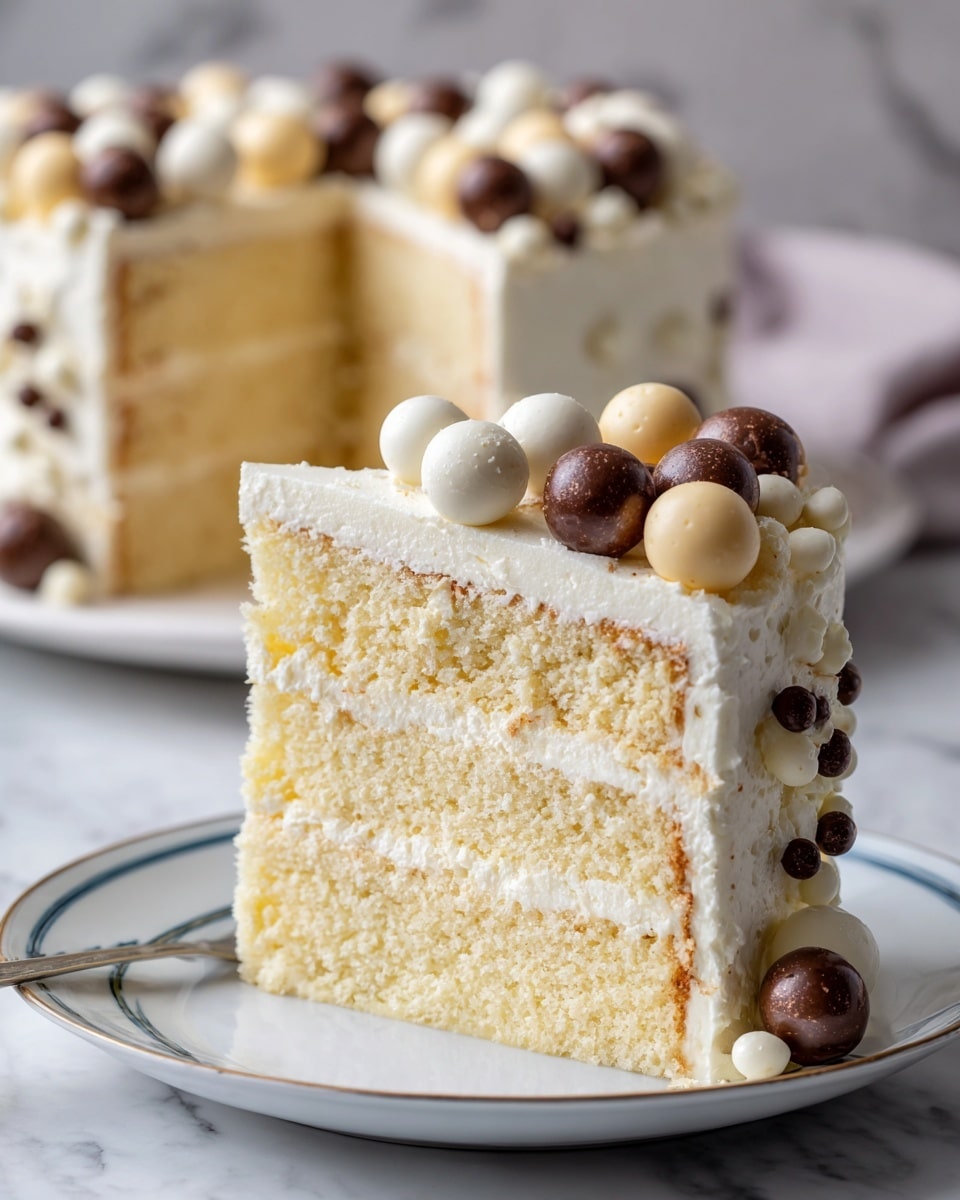
This classic vanilla butter cake is a timeless favorite, known for its tender crumb and rich flavor. Perfect for celebrations or simply enjoying with a cup of tea, it pairs beautifully with smooth Swiss buttercream frosting.
Ingredients
- 16 ounces plain or toasted sugar (about 2 1/4 cups; 455 g)
- 4 1/2 teaspoons baking powder
- 2 teaspoons (8 g) Diamond Crystal kosher salt (for table salt, use about half as much by volume or the same weight)
- 8 ounces unsalted butter (16 tablespoons; 225 g), soft but cool, about 60°F (16°C)
- 3 large eggs, brought to about 65°F (18°C)
- 1/2 ounce vanilla extract (about 1 tablespoon; 15 g)
- 16 ounces whole milk (about 2 cups; 455 g), brought to about 65°F (18°C)
- 16 ounces all-purpose flour (about 3 1/2 cups, spooned; 455 g)
- 1 recipe Swiss buttercream (for finishing)
Instructions
- Step 1: Adjust oven rack to lower-middle position and preheat to 350°F (180°C). Lightly grease three 8-inch anodized aluminum cake pans and line them with parchment paper. If you have fewer pans, you can bake the cake layers in batches, keeping the batter at room temperature as needed.
- Step 2: In a stand mixer fitted with the paddle attachment, combine sugar, baking powder, salt, and butter. Mix on low speed until ingredients are roughly combined, then increase to medium speed and beat until fluffy and light, about 5 minutes. Remember to scrape down the bowl and paddle halfway through.
- Step 3: With the mixer running, add eggs one at a time, allowing each to fully incorporate before adding the next. Then drizzle in the vanilla extract.
- Step 4: Reduce mixer speed to low. Add about one-third of the flour, then drizzle in one-third of the milk. Repeat this process two more times, finishing with the milk. Scrape the bowl and paddle, then mix briefly on medium speed for about 3 seconds until the batter is creamy and thick. The batter temperature should read between 65 and 68°F (18 and 20°C) for best texture.
- Step 5: Fold the batter gently once or twice with a flexible spatula from the bottom up to ensure an even mix. Divide the batter evenly between the prepared pans (about 20 ounces or 565 g per pan).
- Step 6: Place the pans staggered on the oven rack and bake until the cakes are puffed, firm, and pale golden, approximately 32 minutes. If your oven heats unevenly, rotate the pans after 20 minutes. You may bake two layers at once and the third separately if needed.
- Step 7: Cool the cakes in their pans for 1 hour. Run a butter knife around the edges to loosen, invert onto a wire rack, peel off parchment, and return the cakes right side up. Cover with plastic if leaving at room temperature for a few hours.
- Step 8: Level the cakes with a serrated knife and set scraps aside for snacking. Place one layer on a turntable or serving plate. Spread 1 cup of Swiss buttercream evenly over the top. Add the second and third layers, repeating with 1 cup of buttercream per layer. Cover the sides with another cup of buttercream, smoothing as much as possible. Refrigerate for 30 minutes to let the crumb coat set.
- Step 9: Rewhip remaining buttercream to restore creaminess, then use to finish and decorate the chilled cake as desired. Let the cake sit at room temperature for at least 1 hour before serving for the best texture. Use a sharp chef’s knife to cut, and cover any exposed edges with leftover buttercream to keep moist.
Tips & Variations
- For more even layers, weigh the batter to ensure equal amounts in each pan.
- Bringing eggs and milk to room temperature helps the batter emulsify better, resulting in a tender cake.
- If you don’t have Swiss buttercream on hand, a classic American buttercream or cream cheese frosting can be used as alternatives.
- To add a twist, fold in finely grated lemon zest or substitute part of the milk with buttermilk for a subtle tang.
Storage
Store the baked and frosted cake covered with a cake dome or airtight container at room temperature for up to 3 days. For longer storage, refrigerate up to 1 week, allowing it to come to room temperature before serving. Leftover cake slices can be wrapped tightly and frozen for up to 2 months; thaw overnight in the fridge. When reheating, let the cake warm at room temperature rather than microwaving to maintain texture.
How to Serve
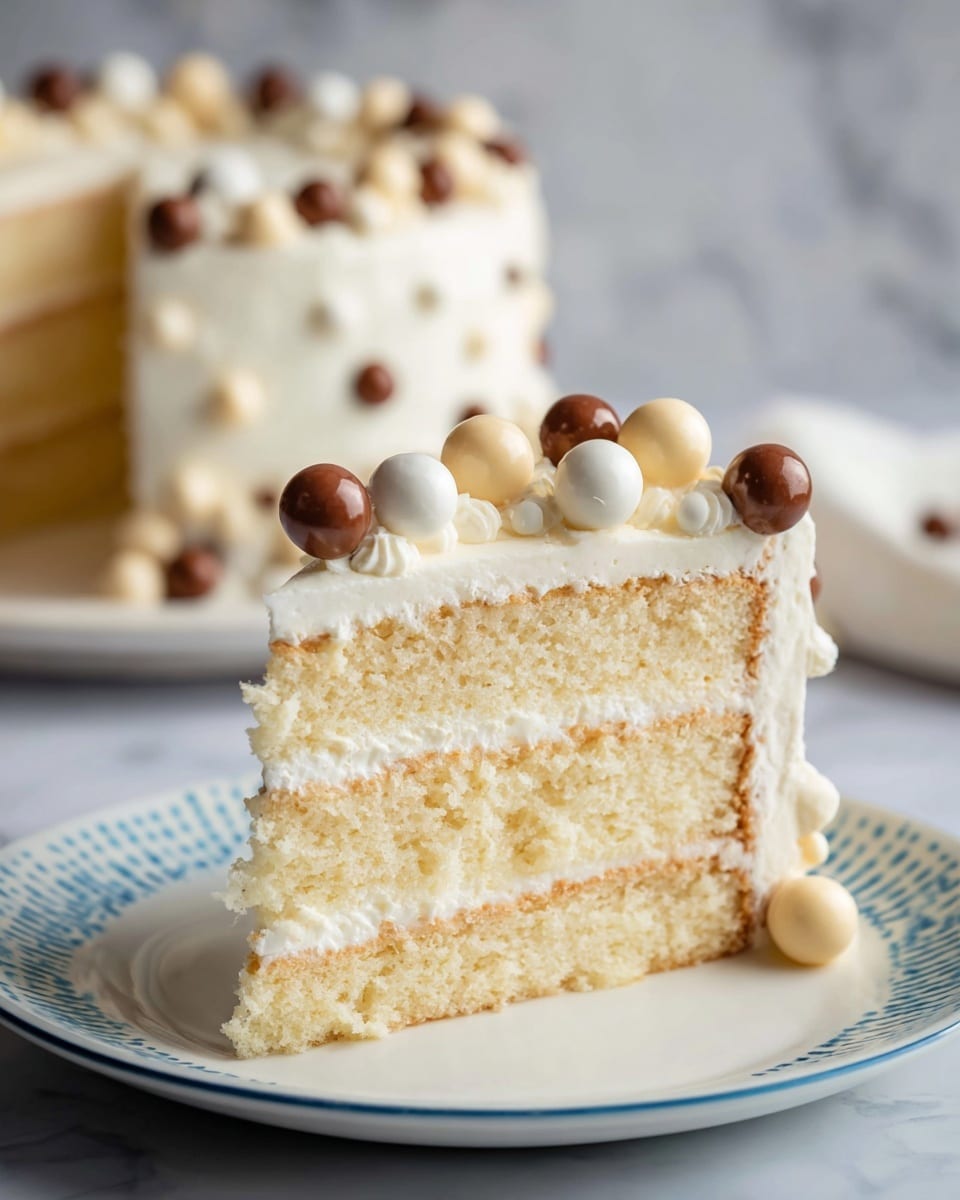
Serve this delicious recipe with your favorite sides.
FAQs
Can I substitute all-purpose flour with cake flour?
Yes, substituting cake flour for all-purpose flour will yield a lighter, more delicate crumb. Use the same weight of cake flour, but you may reduce the baking powder slightly as cake flour is finer.
Why does the batter temperature matter?
The batter temperature affects the cake’s texture and rise. Batter that is too cold or too warm can cause dense or uneven crumb. Aim for 65 to 68°F (18 to 20°C) to ensure a fluffy and tender cake.
PrintClassic Vanilla Butter Cake Recipe
This Classic Vanilla Butter Cake is a moist and tender cake featuring the perfect balance of rich butter and sweet vanilla. Made with simple pantry staples, it is baked in three layers and finished with a smooth Swiss buttercream frosting. Ideal for celebrations or a delightful everyday treat, this cake promises a fluffy crumb and a beautifully smooth texture with every bite.
- Prep Time: 20 minutes
- Cook Time: 32 minutes
- Total Time: 1 hour 52 minutes
- Yield: 3 8-inch cake layers (serves about 12-16) 1x
- Category: Baking
- Method: Baking
- Cuisine: American
Ingredients
For the Cake:
- 16 ounces plain or toasted sugar (about 2 1/4 cups; 455 g)
- 4 1/2 teaspoons baking powder
- 2 teaspoons (8 g) Diamond Crystal kosher salt; for table salt, use about half as much by volume or the same weight
- 8 ounces unsalted butter (16 tablespoons; 225 g), soft but cool, about 60°F (16°C)
- 3 large eggs, brought to about 65°F (18°C)
- 1/2 ounce vanilla extract (about 1 tablespoon; 15 g)
- 16 ounces whole milk (about 2 cups; 455 g), brought to about 65°F (18°C)
- 16 ounces all-purpose flour (about 3 1/2 cups, spooned; 455 g)
To Finish:
- 1 recipe Swiss buttercream
Instructions
- Prepare the oven and pans: Adjust the oven rack to the lower-middle position and preheat the oven to 350°F (180°C). Lightly grease three 8-inch anodized aluminum cake pans and line them with parchment paper. If you don’t have three pans, bake the cakes in stages, as the batter will keep at room temperature until needed.
- Cream sugar and butter: In a stand mixer fitted with the paddle attachment, combine sugar, baking powder, salt, and softened butter. Mix on low speed to roughly incorporate, then increase to medium and beat until mixture is fluffy and light, about 5 minutes. Halfway through, scrape the bowl and paddle with a spatula to ensure even mixing.
- Add eggs and vanilla: With the mixer running, add eggs one at a time, allowing each to fully incorporate before adding the next. Then drizzle in the vanilla extract. Reduce mixer speed to low.
- Alternate adding flour and milk: Sprinkle in about a third of the flour, then drizzle in a third of the milk. Repeat this process two more times until all flour and milk are incorporated. Scrape the bowl and paddle, then mix on medium speed for about 3 seconds to combine everything thoroughly. The batter should be creamy and thick, ideally measuring 65-68°F (18-20°C) with a digital thermometer.
- Fold batter and divide: Gently fold the batter one or two times from the bottom up with a flexible spatula. Divide the batter evenly among the prepared pans, about 20 ounces (565 g) per pan.
- Bake the cake layers: Place the pans staggered on the oven rack and bake until the cakes are puffed, firm, and pale golden, about 32 minutes. For ovens with uneven heat, rotate the pans after about 20 minutes. If baking in batches, bake two layers at once and the third afterward.
- Cool and remove from pans: Allow cakes to cool in their pans for 1 hour. Run a butter knife around the edges to loosen, invert onto a wire rack, peel off the parchment, and return cakes to right-side-up position. Cakes can be kept at room temperature covered with plastic for a few hours if needed.
- Level and crumb coat: Level the tops of the cakes using a serrated knife and save scraps for snacking. Place one layer on a heavy cast iron turntable or cake board. Spread exactly 1 cup of Swiss buttercream evenly over the top. Repeat layering and frosting with the second and third layers. Spread another cup of buttercream on the sides, smoothing as much as possible. Refrigerate the cake for about 30 minutes until the buttercream hardens.
- Final frosting and decorating: Rewhip the remaining buttercream to restore creaminess and use it to finish decorating the chilled cake as desired. Allow the cake to sit at room temperature for at least one hour before serving to avoid it being too cold inside.
- Serving and storing: Cut with a chef’s knife and optionally cover exposed edges with leftover buttercream to maintain moisture. The cake can be stored under a cake dome at room temperature for up to 3 days.
Notes
- Bring eggs, butter, and milk to the recommended temperatures for optimal texture and mixing.
- If not using Diamond Crystal kosher salt, adjust salt quantity accordingly when using table salt.
- For even baking, consider rotating pans halfway through baking if your oven heats unevenly.
- Scraps from leveling the cakes make a delicious snack or can be used for cake pops.
- Allowing the cake to warm to room temperature before serving improves flavor and texture.
- Storing the cake under a dome keeps it moist for several days.
Keywords: vanilla butter cake, classic cake recipe, homemade vanilla cake, layered cake, swiss buttercream, baking recipe